Improving Real Estate SMS Deliverability With Deliverability-Oriented Messaging Features
Real estate SMS marketing has always lived in a narrow lane. It can be fast, personal, and inexpensive compared with many other channels, but it is also easy to abuse. When that happens, carriers react, filters tighten, and legitimate investors feel the pain. A campaign can look fine inside a dashboard while response rates quietly erode because messages never make it to the recipient in a usable way.
That is why deliverability deserves much more attention from investors than it usually gets. Most teams spend their energy on list size, skip tracing for real estate investors, or the wording of the opening text. Those matter. But if your text message marketing for real estate never reaches the seller cleanly, none of the upstream work pays off. Good real estate lead generation depends on contact quality, compliance discipline, and message design that respects how carriers evaluate traffic.
For wholesalers, buy and hold operators, acquisitions teams, and fix and flippers, this is not a theoretical issue. If you are trying to engage motivated seller leads, off market property leads, or distressed seller leads at scale, you are operating in one of the more sensitive categories in business texting. The market is crowded, consumers are skeptical, and carriers have every incentive to block traffic that looks robotic, repetitive, or risky.
Deliverability-oriented messaging features exist to help with that exact problem. They do not replace sound compliance or thoughtful targeting. They improve the odds that your real estate investor texting behaves more like legitimate person-to-person communication and less like a mass blast that triggers scrutiny.
Why real estate investors run into SMS deliverability trouble faster than many other businesses
The real estate investing space creates a rough environment for SMS deliverability real estate campaigns. Investors often contact people who did not wake up that morning hoping to hear from a buyer. Even when the outreach is lawful and relevant, it can still be perceived as intrusive. That means complaints come quickly when messages are vague, repetitive, too frequent, or sent at the wrong time.
There is also a volume problem. A local operator may send a manageable number of motivated seller text messages by hand and maintain decent engagement. The moment that same operator adopts automated SMS for real estate investors, uploads larger lead lists, or adds real estate SMS automation into a broader real estate follow up system, message patterns become easier for carriers to classify. Repetition is efficient operationally, but it is not friendly to deliverability.
Another challenge is data quality. Property owner lookup, real estate skip tracing, bulk skip tracing, and property owner data are useful inputs for seller lead generation, but not every record is equally current or accurate. If your real estate lead data contains stale numbers, landlines, wrong-party contacts, or people who are not appropriate to message, poor engagement follows. Carriers do not need to know why performance drops. They only see the traffic signals.
In practice, investors usually feel the problem through lagging campaign economics. Fewer replies mean fewer conversations. Fewer conversations mean weaker seller lead follow up, thinner real estate sales pipeline activity, and lower return from real estate marketing automation. Teams often respond by increasing volume, which can make the underlying deliverability issue worse.
Deliverability is not just a carrier issue, it is an operations issue
A lot of discussion around text message deliverability frames the problem as if carriers are a black box and investors are helpless. That is not how experienced operators see it. Deliverability has technical components, but it is deeply tied to campaign behavior.
The investor who sends the same opening line to thousands of contacts, at the same cadence, with the same formatting, is training the system to distrust that traffic. The team that rotates campaigns mindlessly between acquisitions reps, keeps messaging numbers with obvious wrong-party histories, or ignores opt-out signals is doing the same. So is the business that treats A2P 10DLC real estate registration as a box to check rather than part of a larger trust framework.
Twilio describes A2P 10DLC as the U.S. Carrier standard for application-to-person SMS sent over 10-digit long code numbers, designed to ensure messaging is verified and consensual. That point matters. The purpose is not simply routing. It is trust. If your actual messaging behavior undermines that trust, registration alone will not rescue performance.
The FTC guidance matters here too. Telemarketers must honor Do Not Call rules, cannot use the National Registry or company-specific DNC lists for any purpose other than compliance, and generally may not call outside 8 a.m. To 9 p.m. Local time without prior consent. For teams that blend SMS, calling, and automated lead follow up, these are not side notes. They shape the safe operating envelope for outreach. If your broader real estate investor automation is sloppy, your texting will eventually reflect it.
What deliverability-oriented messaging features actually do
When platforms talk about text-deliverability-oriented messaging features, they are usually addressing pattern risk. The goal is not to trick carriers. The goal is to reduce the machine-like sameness that often accompanies bulk outreach and to make communications more relevant to the specific seller conversation.
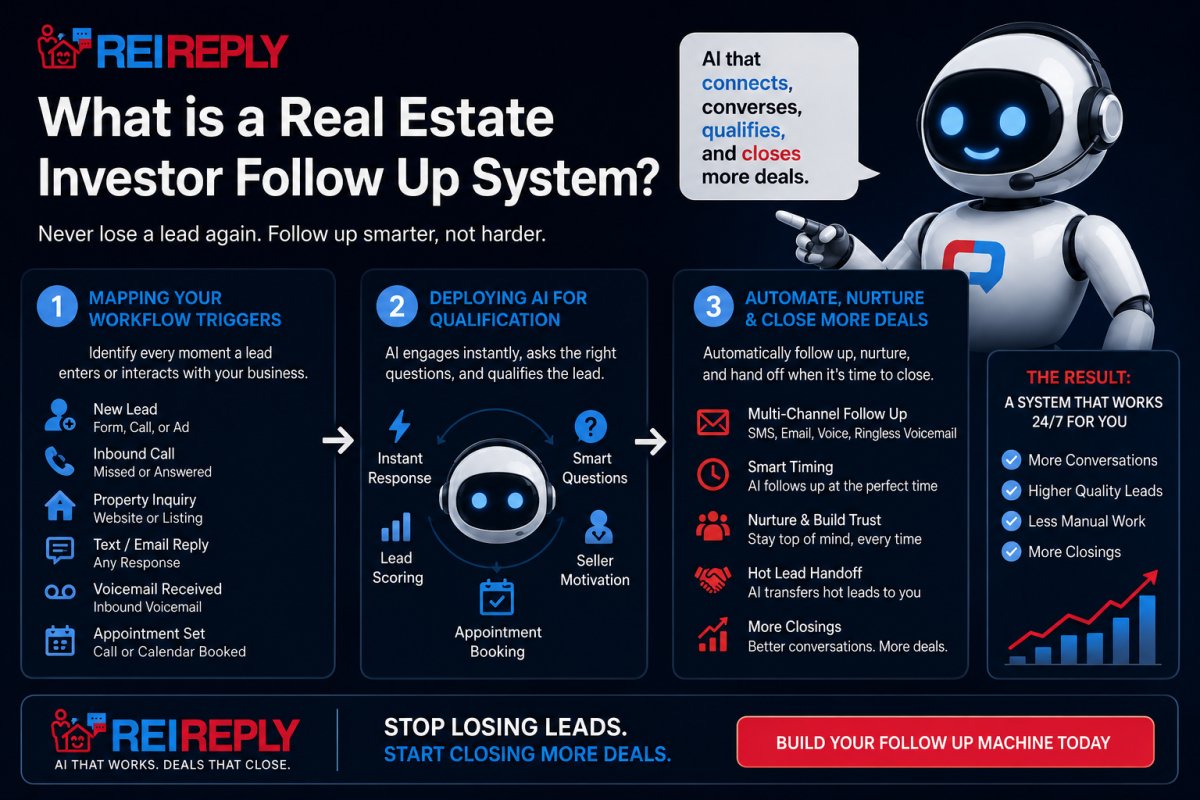
REI Reply publicly positions itself as a real estate investor CRM and follow-up system built specifically for real estate investors. Its site describes a platform that combines inbound and outbound calling, SMS, missed-call text back, and AI voice assistants in one place. It also advertises workflow features for property seller outreach, including lead management, automated follow-up, Spintax, Humanizer, and deliverability-oriented messaging features.
Those details are important because SMS does not operate in isolation. A seller lead automation system works best when the messaging layer is connected to the rest of the conversation record. If a lead came in through PPC, SEO, cold calling, or another channel, the first text should not feel like a blind generic blast. If a seller already spoke with an acquisitions rep, the follow-up should reflect that context. If a missed call came in, the text-back should feel responsive and timely rather than canned.
Spintax and Humanizer-style functionality are often misunderstood. Used well, they help teams avoid sending identical language repeatedly. Used poorly, they produce awkward wording and make messages feel less human, not more. That trade-off matters. Deliverability-oriented messaging is not about swapping one synonym for another until the system looks random. It is about preserving natural communication patterns while staying consistent with your brand and process.
A simple example shows the difference. A weak template says the same thing to every contact in the same rhythm with the same punctuation and no reference to why that property owner is hearing from you. A stronger template may still be standardized, but it leaves room for variables, softer phrasing, and context tied to the lead source or stage. One reads like automated text messaging. The other reads closer to a legitimate outreach attempt from a local buyer or acquisitions team.
The hidden cost of over-automation
Real estate automation is useful right up until it strips away judgment. This is where some teams damage deliverability without realizing it.
A common pattern looks like this. A business invests in real estate investor software, loads motivated seller data, starts an automated SMS campaign, then bolts on AI lead follow up and a few workflow rules. The first real estate texting software few weeks look busy. There are outbound texts, some replies, and a fuller dashboard. Then response rates soften. Opt-outs rise. Acquisitions complains about low-quality conversations. The instinct is often to buy more seller leads or send more follow-up messages.
What usually needs fixing is not volume, but message discipline.
Automated SMS for real estate investors works best when the automation is selective. You want the system to handle timing, routing, reminders, and lead nurturing real estate workflows. You do not want it to flatten every seller interaction into the same script. Distressed property leads, inherited-property situations, absentee owner records, and fresh inbound leads from a website do not all deserve the same first touch.
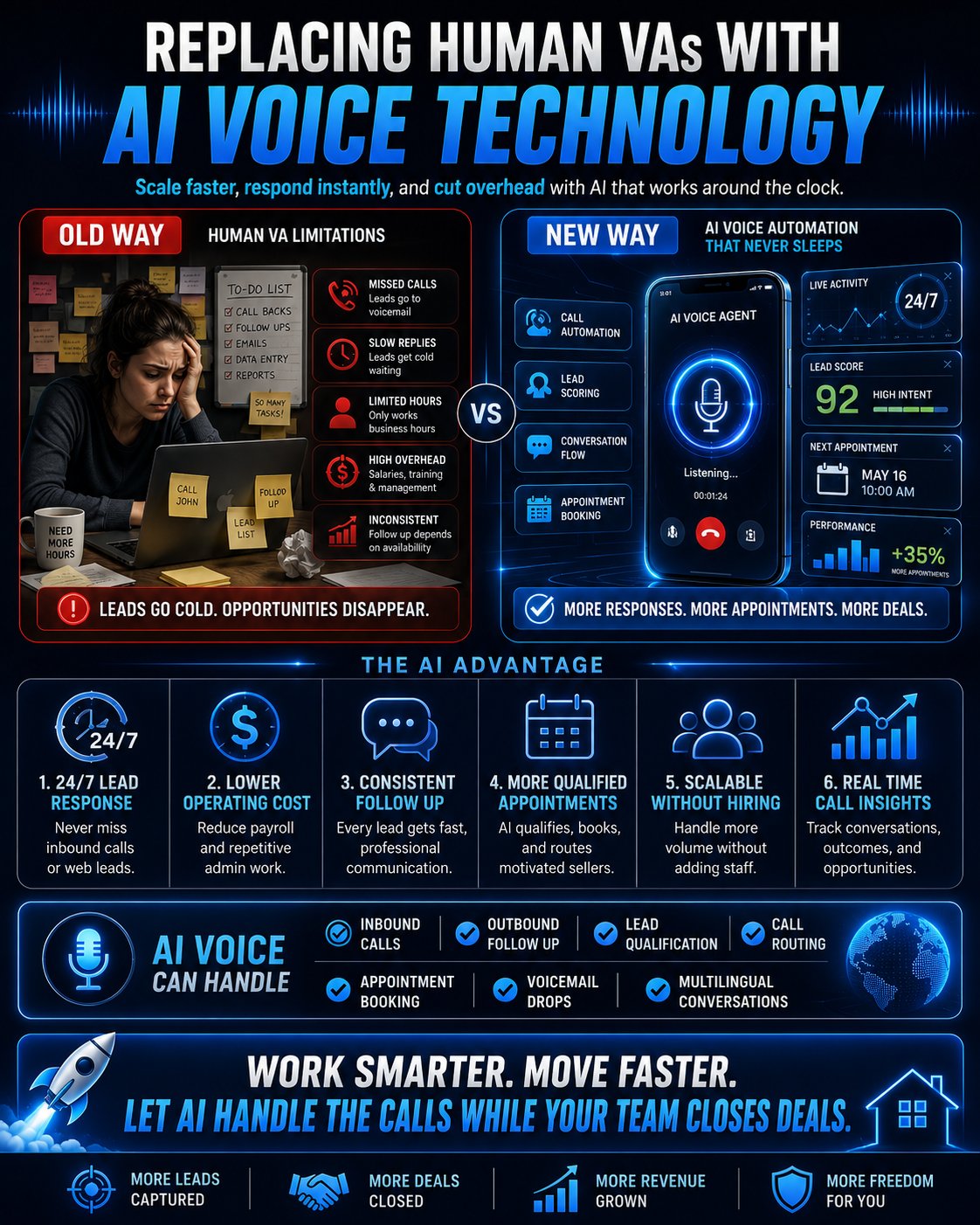
The same principle applies when AI for real estate investors enters the stack. REI Reply states that its AI voice agent can qualify leads, book appointments, and follow up around the clock across calls, SMS, email, and social channels. For many teams, that kind of real estate call automation and AI lead qualification can create meaningful speed. But speed has to be paired with restraint. If the AI layer pushes contacts too aggressively, repeats touchpoints too tightly, or fails to reflect prior contact history, it may create more filtering pressure instead of less.
In other words, real estate AI can improve real estate lead follow up, but only if it is governed like a communication system, not treated like a volume machine.
Where compliance and deliverability overlap
Some teams talk about compliance as a legal problem and deliverability as a marketing problem. In the field, they overlap constantly.
Carrier filtering often reacts to the same behaviors that create compliance exposure. Sending messages at inappropriate times, failing to honor opt-outs, or contacting people without a disciplined process around consent and suppression can damage both. Even when rules technically differ between calls and texts, the broader pattern of responsible outreach still matters.
For investor CRM workflows, this means a real estate follow up automation system should not just blast and log activity. It should support suppression hygiene, timing controls, and clear segmentation. A best CRM for real estate investors is not merely a place to store contacts. It should help teams avoid contacting the wrong people, through the wrong channel, at the wrong moment.
The FTC also notes that prerecorded telemarketing calls generally require prior signed, written agreement, and that consent can be obtained electronically if E-SIGN requirements are met. Investors who use voice AI for real estate investors, AI calling real estate workflows, or an AI phone agent real estate setup need to understand that the communication stack is interconnected. If one part of the outreach engine is careless, it creates pressure on the whole operation, including SMS.
This is one reason a unified system can help. REI Reply describes itself as a conversion engine for leads a business is already generating, not a lead provider in the classic sense, although its subscription includes access to verified motivated seller data through REI AI Leads. Whether the lead originated from your own marketing or from data made available inside the platform, the follow-up environment matters. When lead management, calling, SMS, and automation live together, it becomes easier to maintain continuity and easier to spot messaging patterns that are hurting you.
How better messaging patterns improve real estate SMS deliverability
There is no public formula that says, “write texts this exact way and you will bypass filtering.” Anyone who claims that is overselling. But in practice, healthier messaging patterns usually share the same traits.
First, they sound specific. A message that acknowledges context tends to perform better than one that could be sent to any homeowner in America. That does not mean overloading the text with property details. It means giving the recipient a plausible reason for the contact.
Second, they stay readable. Some investors try to outsmart filtering with odd spelling, heavy punctuation changes, or obviously unnatural variations. That often backfires. Deliverability improves when language remains clean and conversational.
Third, they fit the stage of the relationship. A cold seller text is different from a follow-up after an inbound form fill, which is different from an appointment reminder. When every text feels like the same ask, engagement drops.
Fourth, they leave room for an actual response. Many motivated seller follow up sequences fail because they ask too much, too soon. Sellers are more likely to engage when the opening move is easy to answer.
Fifth, they respect frequency. A real estate lead nurturing sequence should not feel like pressure. It should feel persistent but measured.
A lot of what platforms market as Humanizer functionality is really support for those five basics. The feature matters less than the discipline behind it.
A practical way to use deliverability-oriented features without making your texts weird
Here is where I have seen investors get real value. They start with a few strong base templates tied to actual lead scenarios, then use variation carefully. The point is not endless randomness. It is preserving natural language while reducing exact repetition.
A cold outreach template for seller lead generation should read differently from a message sent after a missed call. A follow-up to a web lead should read differently from a message sent after an initial conversation with an acquisitions manager. If your CRM for real estate investors supports workflow branching, use that branching to drive relevance, not just speed.
This is also where AI lead management can help if the rules are good. A system can decide whether a lead gets a missed-call text back, a manual task for a rep, an AI follow up touch, or a delayed nurture message. That kind of routing improves the seller experience and reduces the temptation to hammer everyone with the same cadence.
The strongest operators I know treat messaging templates almost like sales scripts. They are revised, tested, and pruned. They remove lines that feel pushy. They simplify questions that confuse sellers. They retire variants that read stiffly. The deliverability benefit comes from thoughtful message diversity, not decorative word changes.
What a solid operating framework looks like
You do not need a huge stack to improve real estate SMS automation. You need a sane framework.
- Register and operate within the A2P 10DLC structure for application-to-person SMS traffic, then make sure your actual campaign behavior matches the spirit of verified, consensual messaging.
- Build your real estate lead management process so DNC handling, timing controls, and suppression rules are part of the workflow, not a manual afterthought.
- Use deliverability-oriented features such as Spintax or Humanizer only after your base copy already sounds natural and relevant.
- Segment by lead source and stage, because inbound web leads, cold outreach leads, and active conversations should not receive the same automated SMS.
- Review response quality, not just send volume, because a healthy seller lead follow up system is measured by conversations and appointments, not by how many texts left the platform.
That framework is deliberately simple. Investors often want a secret tactic when the real gains come from doing the obvious things thoroughly.
Why unified follow-up platforms matter more than point tools
A lot of real estate investing software categories overlap now. You have tools for skip trace property owners, tools for lead generation automation, tools for AI seller conversations, tools for voice, tools for texting, and separate databases for property data. Stitching them together can work, but it can also create blind spots.
A unified investor CRM has a practical advantage for deliverability. It can anchor communication history in one place. If a lead replied last week, the next touch should know that. If a number has a wrong-party history, your team should see it. If a seller has already spoken to an AI real estate assistant or a human acquisitions rep, the SMS follow up should reflect that interaction.
REI Reply’s positioning is relevant here because it is framed as a real estate AI CRM and conversion engine for investors rather than just an outbound tool. Its site describes support for inbound and outbound calling, SMS, AI voice assistance, missed-call text back, lead management, and automated follow-up. For teams running SEO, PPC, cold calling, or SMS for real estate investors, that consolidation can reduce the operational sloppiness that hurts deliverability.
That does not mean a platform alone fixes anything. A messy process inside a better system is still messy. But a connected environment makes it easier to enforce the standards that matter, especially when your real estate investor follow up spans multiple channels.
The role of data quality in SMS performance
It is tempting to treat property data for real estate investors as a separate topic from SMS deliverability, but they are linked. The better your lead data, the more credible your texting behavior looks from the outside.
If you are working from off market data, motivated seller data, or broader real estate lead lists, quality control matters. Bad records lead to wrong-party replies, opt-outs, and negative engagement. Good records improve the odds that your message lands with someone who can actually have the conversation.
This is where people overestimate what automation can fix. No amount of real estate text message automation can rescue a weak list. AI lead generation real estate workflows can help prioritize and route. AI lead qualification can help sort responses. But neither changes the fact that outreach quality starts with who you contact.
That is part of the appeal of integrated systems that combine data access with follow-up workflows. REI Reply states that subscriptions include access to verified motivated seller data through REI AI Leads. The operative word there is verified, but even verified data still benefits from careful campaign design. Verification is a better starting point, not a permission slip to become careless.
The message investors should take seriously
Real estate acquisitions is a speed business, but not every bottleneck should be solved with more automation or more sends. Sometimes the better move is tighter language, cleaner segmentation, and stronger controls around how your campaigns behave.
If you are serious about real estate SMS marketing, think of deliverability as a system outcome. It is shaped by A2P compliance, list quality, message variation, timing discipline, and whether your outreach actually resembles a legitimate business conversation. Deliverability-oriented messaging features can help a great deal, especially inside a platform built for real estate investor follow up. But those features work best when they support good habits rather than mask bad ones.
For investors using real estate automation software, the goal is straightforward. Build a follow-up engine that is fast, relevant, and respectful enough that sellers respond, carriers trust the traffic, and your team can keep scaling without watching performance decay in the background. That is what sustainable SMS automation real estate programs look like in practice.